59
The Core Foundations of At-Home Fitness
Before purchasing equipment or designing a weekly workout schedule, it is essential to establish the foundational principles that govern physical conditioning. Your muscles do not know the difference between an expensive selectorized cable machine and a heavy household water jug. Muscle growth, cardiovascular endurance, and fat loss depend on three primary training pillars:
-
Progressive Overload: To continue seeing physical adaptations over time, you must consistently challenge your body. You can achieve progressive overload at home by increasing repetition counts, slowing down movement speed, shortening rest periods, increasing total sets, or adding external resistance.
-
Movement Pattern Variety: A comprehensive training program covers fundamental human movement patterns rather than isolating individual muscles. These patterns include push, pull, hinge, squat, lunge, and core stability movements.
-
Consistency and Adherence: The most effective exercise routine is the one you can stick with consistently. Training three to four times per week at home eliminates commute times and scheduling conflicts, making long-term consistency much easier to maintain.
Essential Low-Cost Equipment Under Fifty Dollars
While Calisthenics or bodyweight training requires zero equipment, investing a small amount in versatile, budget-friendly tools significantly expands your exercise options and enhances muscle engagement.
-
Loop Resistance Bands: A set of elastic loop resistance bands offers scalable tension across various exercises. Bands provide accommodating resistance, meaning tension increases as the band stretches, making them ideal for leg movements, shoulder presses, and chest exercises.
-
Fabric Mini Loop Bands: These compact bands fit around your thighs or ankles, adding targeted resistance to hip abductors, glutes, and hamstrings during squats, glute bridges, and lateral walks.
-
Door-Mounted Pull-Up Bar: A sturdy doorway pull-up bar allows you to perform vertical pulling exercises, which are difficult to replicate using bodyweight alone. Pull-ups and chin-ups target your upper back, lats, and biceps effectively.
-
Jump Rope: A simple jump rope is one of the most efficient cardiovascular tools available. A ten-minute jump rope session provides a high-intensity cardio stimulus comparable to running on a commercial treadmill.
-
High-Density Exercise Mat: A non-slip yoga or fitness mat cushions joints, protects floors, and provides traction during floor exercises, core work, and stretching routines.
Creative Household Substitutes for Free Weights
If you choose not to spend money on commercial fitness gear, your home is already full of functional objects that double as workout weights:
-
Gallon Water Jugs: A full gallon water jug weighs approximately eight point three pounds and features a built-in handle, making it a great substitute for dumbbells during shoulder presses, bicep curls, or overhead tricep extensions.
-
Backpack Loaded with Books: A durable backpack packed with heavy books, canned goods, or bags of rice creates a fully customizable weighted vest. Wear it on your front or back while performing push-ups, squats, lunges, or step-ups.
-
Sturdy Chair or Couch: Furniture provides elevation for split squats, elevated glute bridges, tricep dips, and incline or decline push-ups.
-
Microfiber Towel on Hard Floors: Placing a small towel under your feet on wood or tile floors transforms smooth surfaces into a sliding platform for lunges, hamstring curls, and mountain climbers.
Structuring a Balanced Weekly Routine
A balanced home workout program combines resistance training and cardiovascular conditioning across a manageable weekly split. Below is a structured four-day workout template designed for all fitness levels.
Day One: Upper Body Strength Focus
Perform three sets of eight to fifteen repetitions for each exercise, resting sixty seconds between sets:
-
Push-Up Variation: Standard push-ups, knee push-ups, or decline push-ups off a chair to target the chest and shoulders.
-
Inverted Row or Doorway Pull: Using a pull-up bar or holding a folded bedsheet anchored in a closed door frame to work the upper back.
-
Overhead Backpack Press: Pressing a loaded backpack directly overhead to build shoulder strength.
-
Bicep Curls to Tricep Extensions: Super-setting resistance band or water jug bicep curls with overhead tricep extensions.
-
Plank Hold: Three sets of thirty to sixty seconds to build core stability.
Day Two: Lower Body and Core Focus
Perform three sets of ten to twenty repetitions for each exercise:
-
Bodyweight or Weighted Squats: Using proper depth while holding a loaded backpack across your chest.
-
Bulgarian Split Squats: Elevating your rear foot on a chair while lunging downward to target quads and glutes.
-
Glute Bridges: Lying flat on your back and pressing hips upward, adding a mini band around the knees for extra resistance.
-
Single-Leg Deadlifts: Hing at the hips while balancing on one leg to strengthen hamstrings and lower back muscles.
-
Bicycle Crunches: Alternating elbow-to-knee contact to target the obliques.
Day Three: Rest or Active Recovery
Focus on low-impact movement such as a thirty-minute outdoor walk, light bodyweight mobility work, or full-body static stretching to promote blood flow and tissue recovery.
Day Four: Full Body High-Intensity Interval Circuit
Perform each exercise for forty seconds, followed by twenty seconds of rest. Complete three total rounds of the five-exercise circuit:
-
Bodyweight Burpees or Squat Jumps: Rapid dynamic movements to elevate heart rate quickly.
-
Resistance Band Rows: Pulling bands toward your torso while maintaining a strong hinged stance.
-
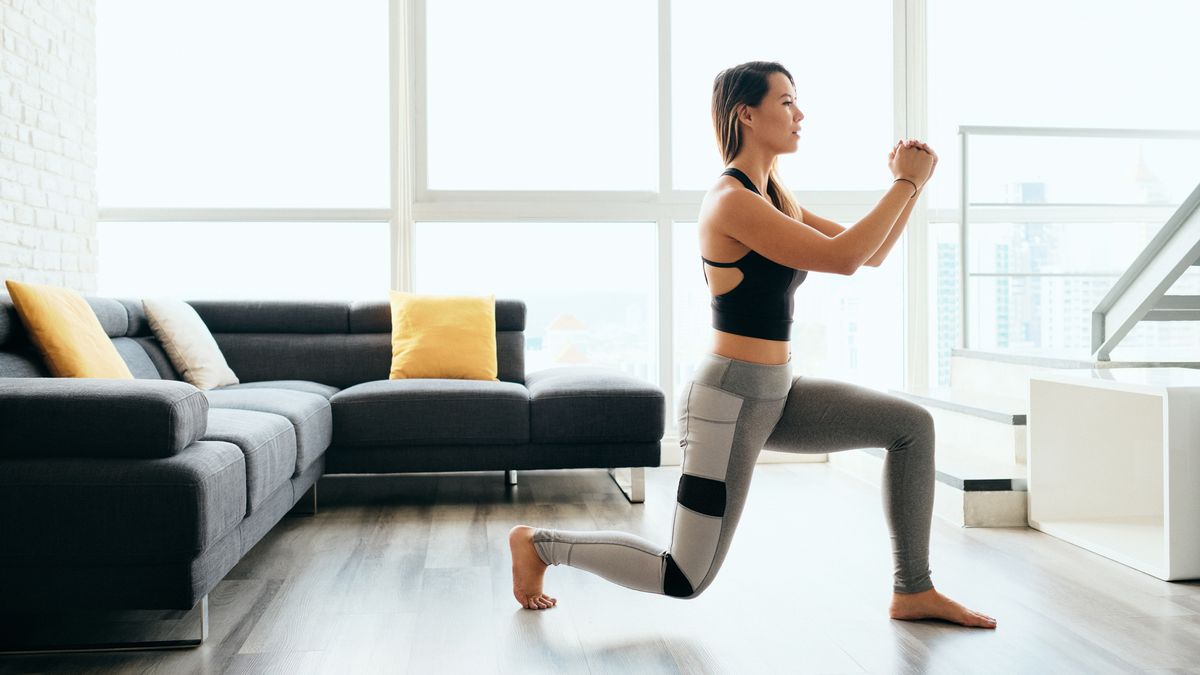
Bodyweight Alternating Reverse Lunges: Stepping backward into lunges to reduce knee stress while keeping tempo high.
-
Mountain Climbers: Driving knees toward the chest in a top-pushup position to build core endurance.
-
Jump Rope Intervals: Maintaining a steady, rhythmic bounce to finish the circuit.
Overcoming Space Constraints and Staying Motivated
Exercising in a limited living area requires flexibility and strategic planning. Clear a six-by-six foot space by moving coffee tables or light furniture before starting your session. Keep your workout gear stored together in a small basket or tote bag so that setting up takes less than two minutes.
To keep your motivation high without an instructor present, track your progress meticulously. Record the number of repetitions, sets, or hold times achieved in a dedicated notebook or free smartphone app. Watching your numbers improve over time provides clear visual proof that your budget-friendly home program is delivering real, measurable results.
Frequently Asked Questions
How long should an effective at-home workout last?
An effective at-home workout does not need to take hours. A focused thirty to forty-five minute session that includes a brief dynamic warmup, three to four challenging strength exercises, and a short cool-down is completely sufficient for building strength, burning calories, and improving fitness.
Can you build noticeable muscle size using only bodyweight exercises?
Yes, you can build muscle size using bodyweight movements provided you create sufficient mechanical tension. To stimulate muscle growth without heavy weights, perform repetitions close to muscular failure, slow down the eccentric lowering phase of each movement, increase overall volume, or select harder movement variations like single-leg or single-arm progressions.
What is the best low-cost surface for jumping exercises at home?
When performing jumping rope, burpees, or plyometrics at home, avoid hard concrete or unpadded tile floors to protect your joints from impact stress. The best budget surfaces are carpeted areas, a high-density rubber exercise mat, or outdoor grass lawns.
How do I warm up properly for a home workout without treadmill access?
A proper dynamic warm-up takes five to eight minutes and requires no equipment. Combine light cardio movements like arm circles, leg swings, torso twists, bodyweight air squats, and gentle jumping jacks to elevate core body temperature, lubricate joint cartilage, and prime your central nervous system for movement.
How can I make push-ups harder without buying heavy weights?
You can increase push-up difficulty by elevating your feet on a chair or couch, slowing your lowering speed down to four seconds per repetition, adding a two-second pause at the bottom of each movement, wearing a weighted backpack, or placing a loop resistance band across your upper back while holding the handles under your palms.
How often should I update my at-home exercise routine?
You should keep the core exercises in your routine consistent for six to eight weeks before making major changes. Changing movements too frequently makes it difficult to measure progressive overload. Instead of swapping exercises weekly, focus on adding repetitions, improving form, or increasing resistance on your existing exercises.
Is it necessary to take protein supplements when working out at home?
Protein supplements like whey or plant powder are convenient, but they are not strictly necessary. You can fulfill your daily muscle recovery needs entirely through whole food sources like chicken breast, eggs, Greek yogurt, canned tuna, tofu, lentils, and beans. Aim for a balanced diet that meets your total daily protein target through accessible grocery staples.
