Watch a tent on the last morning of a camping trip, after the pegs have worked loose in the night. The canvas does not sag all at once. First the guy ropes slacken, then the poles lean, and only then does the fabric begin to fold. Smooth the fabric alone and the tent slumps again by noon.
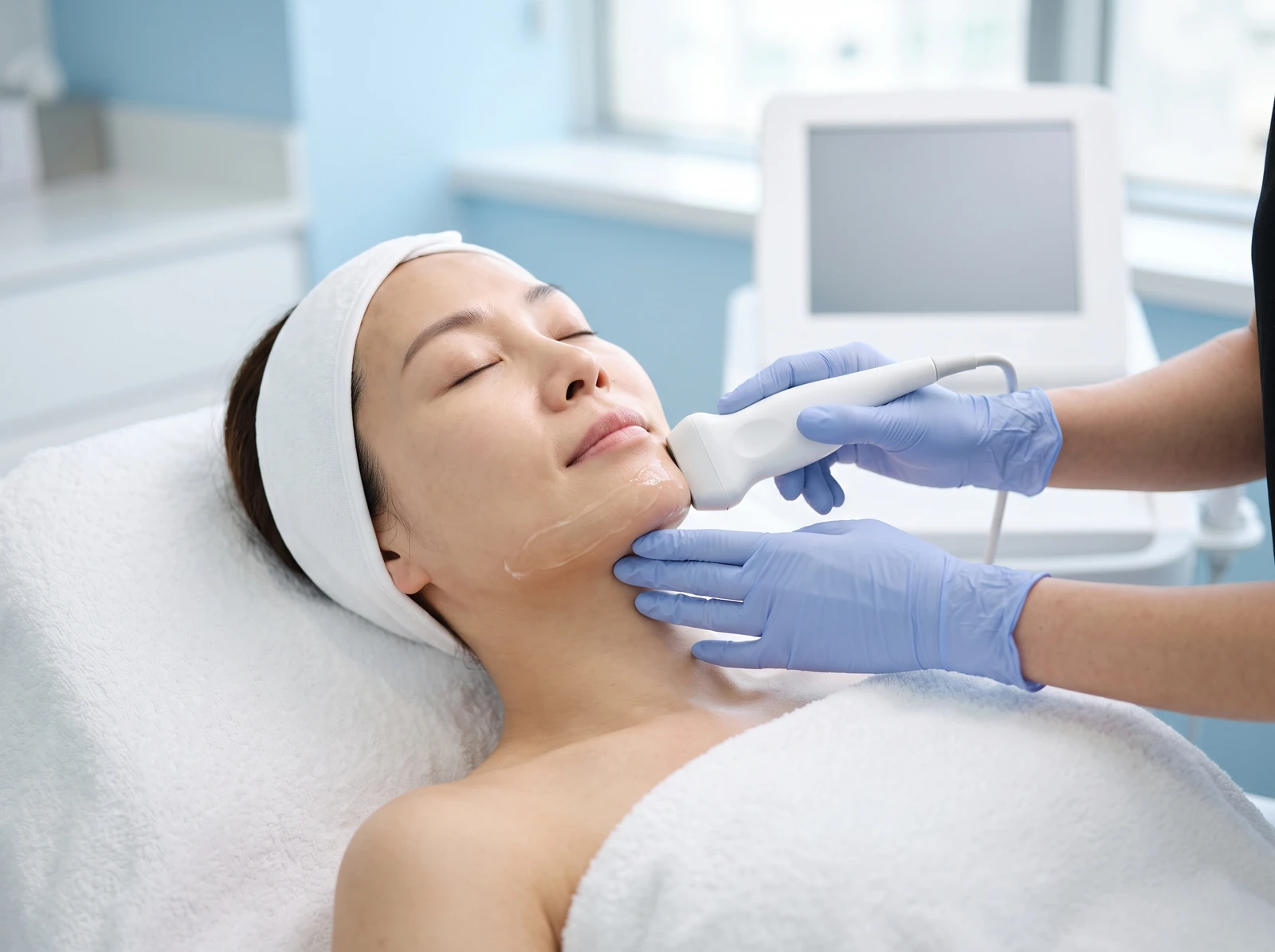
A face loosens in a similar order. The skin you see in the mirror is only the top of a stack of layers, and much of the slackening starts lower down, in a firm sheet of tissue that sits over the facial muscles. That is why so much interest in non-surgical lifting now centres on reaching those deeper layers with focused ultrasound, and why treatments such as ultherapy prime pair that energy with live imaging, so the doctor can see the tissue before treating it. Before you book anything of this kind, it helps to know which layer is doing the sagging, and what heat beneath the surface can and cannot change.
The Layers Beneath the Mirror
Think of the face as four sheets laid one over another. On top sits the thin outer skin. Below it is the dermis, a dense mat of collagen and elastic fibres that gives skin its spring. Then comes a cushion of fat, and under that the deeper sheet of connective tissue that holds the whole arrangement in place, like the ropes holding the tent.
Collagen is the quiet worker here. With age the body makes less of it, and the fibres it does make grow looser. Focused ultrasound works by sending energy through the surface to small points underneath, where it warms the tissue. The body responds to that warmth by laying down fresh collagen, slowly, while the outer skin is left unbroken.
Why Seeing the Tissue Matters
No two faces carry their layers at the same depth. Skin over the jaw is built differently from skin over the brow, and a thin face differs from a full one. Energy aimed a few millimetres too shallow or too deep lands in the wrong layer.
This is where imaging helps. The handheld transducers each deliver energy at one set depth, so one might reach 1.5 millimetres and another 4.5. When the screen shows the tissue in real time, the doctor can check where each layer lies before choosing which depth to use, rather than working from an average.
Laxity, Volume and Fat Are Different Problems
Many people stand at a mirror, pull their cheeks towards their ears, and decide they need a lift. That gesture tells you something, but not everything. Slack skin, hollow cheeks and a full chin can all read as ageing in the glass, yet focused heat answers only one of them.
Before a consultation, these three questions can help you describe what you notice:
- Does the skin drape or fold along the jaw when you look down? That points towards laxity, the loosening that collagen supports.
- Do the cheeks or temples look hollow or flat? That is often lost volume, which warming the tissue does not replace.
- Is there a soft fullness under the chin that stays when you lift your head? That may be fat, and heat on its own may not change it much.
These are prompts for a conversation, not a diagnosis. A doctor examines the tissue in person and can tell you which of these is at work in your own face.
The Slow Clock of Collagen
New collagen is not poured in like concrete. It is laid down fibre by fibre over several months, the way moss creeps across a stone wall. Whatever change the tissue makes arrives gradually, not overnight.
One timing mistake is booking a session a few weeks before a wedding or a reunion and expecting the face to have caught up by then. The body keeps its own calendar. If a date matters to you, raise it at consultation and ask how the timing works for your plans.
Questions Worth Bringing to a Consultation
A good appointment runs both ways. You are there to be assessed, but also to understand. It is worth asking how the doctor decides which depths to treat in each area, and how long the session will take. A full face and neck can take an hour or more.
Ask, too, what you might feel afterwards. Mild redness or warmth in the treated area and some tenderness along the jaw are described as mild and temporary, and people can usually return to daily routines the same day. Mention if you are pregnant, have metal implants in the area, or have any active skin infection, as these can rule the treatment out.
Return to the tent for a moment. The camper who tightens the ropes first, then the poles, and only then smooths the canvas has a tent that holds its shape through the afternoon. Faces call for the same patience. Learn which layer has slackened, give the body the months it needs to rebuild, and let a doctor who can see beneath the surface help you decide whether this is the right step for you.
