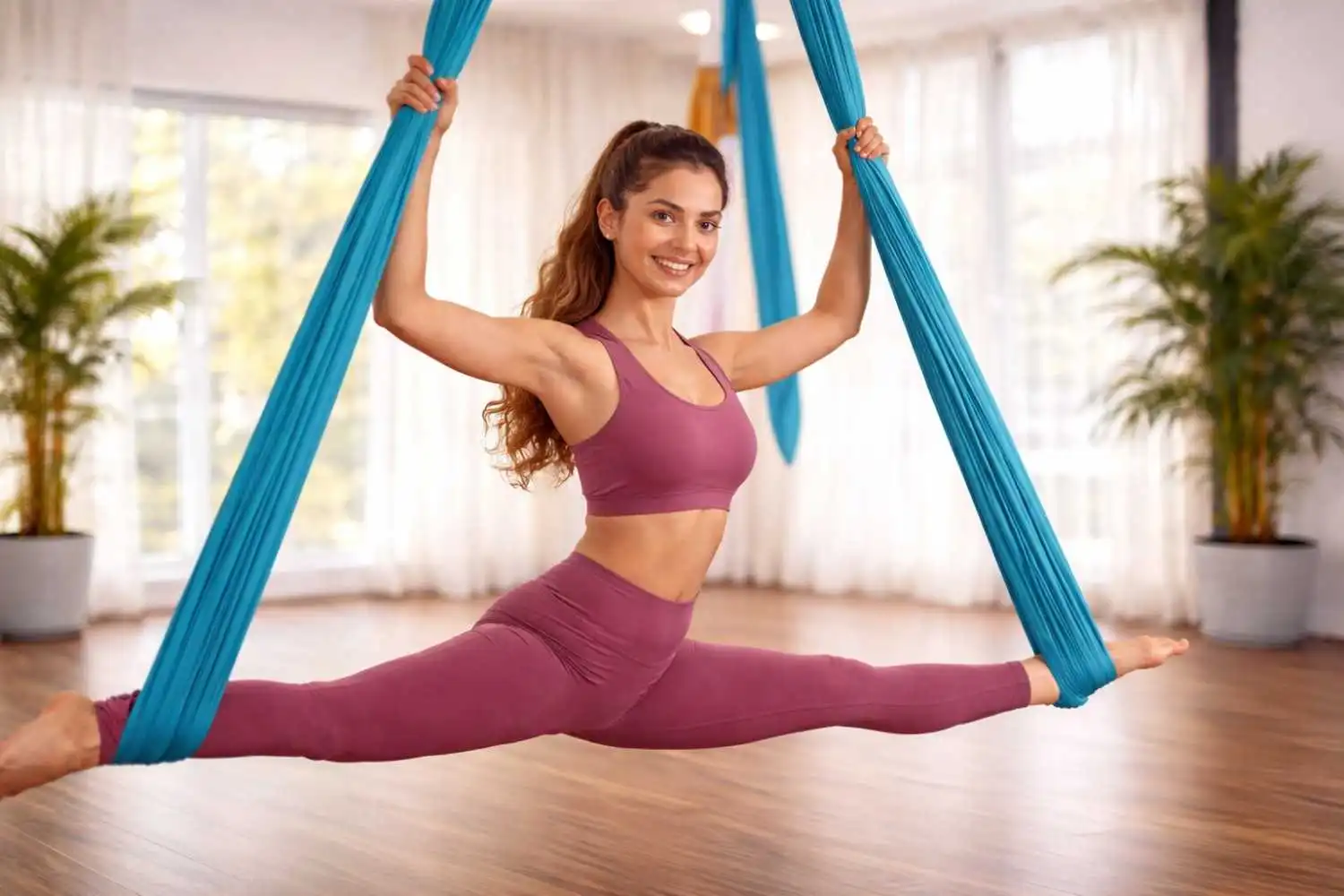
Many people want stronger bodies, better flexibility, and less stiffness, but they do not always want a fitness routine that feels harsh on the joints or repetitive on the spine. This is one reason aerial yoga has become interesting for adults who want movement that feels different from standard mat practice. By using a hammock for support, the body can explore strength, balance, decompression, and mobility in a way that feels both challenging and assisted.
Aerial yoga is often seen as visually impressive because of suspended poses and inversions, but its health value goes much deeper than appearance. The hammock changes how the body experiences gravity. It can support weight, reduce pressure in certain positions, and help students access movements that may feel difficult on the floor. At the same time, it challenges the core, grip, balance, and body awareness in ways that ordinary stretching may not.
Why Core Control Matters More Than Core Strength Alone
Core strength is often misunderstood. Many people think it means having visible abdominal muscles or doing many crunches. In real movement, the core is about control. It helps stabilize the spine, support the pelvis, organize the ribs, and allow the arms and legs to move without creating unnecessary strain.
Aerial yoga can improve this type of control because the hammock is not a fixed surface. It moves. The body has to respond to that movement. A simple suspended position may require the core to work continuously to keep the body steady.
This is different from many floor-based exercises where the ground provides full support. In aerial practice, the student must learn how to control movement through the center of the body. If the core switches off, the body may swing, twist, or lose balance.
How the Hammock Changes Spinal Pressure
Many adults carry spinal stiffness from long sitting, screen use, poor posture, and limited movement variety. The spine may feel compressed after long hours at a desk or during travel. Aerial yoga can offer supported positions where the body experiences a sense of length and release.
In certain movements, the hammock supports part of the body’s weight. This can allow the spine to lengthen without the same pressure as standing or seated positions. Some students find this useful because they can explore extension, traction, or gentle inversion with support.
This does not mean aerial yoga should be treated as medical spinal therapy. People with back conditions should get professional advice before trying inversions or suspended postures. However, for many healthy adults with general stiffness, the supported nature of the hammock can create a refreshing movement experience.
Balance Becomes a Full-Body Skill
Balance in aerial yoga is not only about standing still. It is about adjusting to movement. The hammock shifts slightly as the student moves, which makes the body more alert. Small stabilizing muscles need to work.
This trains coordination. The feet, hips, core, shoulders, hands, and eyes all contribute. Over time, students may become more aware of how their body reacts when stability changes.
This type of training can be useful outside the studio too. Better balance and coordination support everyday movement, especially when walking on uneven surfaces, carrying bags, or moving quickly.
Why Aerial Yoga Can Feel Both Supported and Challenging
One of the most interesting parts of aerial yoga is that it offers support and challenge at the same time. The hammock can make some movements easier by holding the body. It can also make other movements harder because the body must control an unstable support.
For example, a forward fold with hammock support may feel easier on the lower back. A suspended plank or core movement may feel much more challenging than expected. This contrast makes the practice unique.
Students often discover muscles they do not usually feel in regular workouts. The grip, inner thighs, deep core, and shoulders may all become more active.
Body Awareness Improves Quickly
Aerial yoga demands attention. A student must notice where the fabric is placed, how much weight is supported, how the body is aligned, and how to enter and exit movements safely. This improves body awareness.
In mat yoga, people can sometimes move automatically. In aerial yoga, the hammock asks them to pay closer attention. A small change in placement can affect comfort and stability. A rushed movement can feel awkward. A steady breath and controlled pace make the practice smoother.
This awareness can help students become more mindful of posture, tension, and movement habits.
Shoulder and Grip Strength in Aerial Practice
Aerial yoga often involves holding the hammock, pulling, stabilizing, or supporting part of the body with the upper body. This can build grip and shoulder strength, but it must be approached carefully.
People who spend long hours at desks may have tight shoulders but weak stabilizing muscles. Aerial yoga can help activate these areas, but students should avoid forcing movements. Good instruction is important so the shoulders stay supported and not strained.
A healthy aerial practice should build strength gradually. Students should learn how to engage the back, stabilize the shoulders, and use the core instead of relying only on the arms.
Why Breath Still Matters
Because aerial yoga can feel exciting, some students may hold their breath during new positions. This is a sign that the body feels uncertain. Breath helps restore control.
A steady breath can reduce unnecessary tension and help the student move more smoothly. It also helps manage fear, especially during inverted or suspended positions. When students learn to breathe in unfamiliar positions, they build confidence.
This is one of the deeper health benefits of aerial yoga. It trains the body to stay calm while doing something new.
Who Can Benefit From Aerial Yoga?
Aerial yoga may appeal to people who want a fresh movement experience, better core control, improved body awareness, and a supported way to explore flexibility. It may also suit people who feel bored by repetitive routines and want something that keeps the mind engaged.
However, it may not be suitable for everyone. People with certain medical conditions, dizziness, uncontrolled blood pressure, recent surgery, pregnancy, glaucoma, severe spinal issues, or serious shoulder problems should speak with a healthcare professional before trying it.
A responsible practice begins with honest body awareness and proper instruction.
Building Confidence Through Supported Movement
Many students feel nervous before trying aerial yoga. That nervousness is normal. The hammock can feel unfamiliar at first. But with guidance, students often discover that the support makes certain movements feel safer than expected.
Confidence grows through small successes. Learning how to sit in the hammock, hold the fabric, control a basic swing, or enter a supported pose can change how a person relates to their body. They begin to trust their strength and balance.
This confidence is not only physical. It can affect mindset too. A person who learns to stay calm upside down may feel more capable in other challenges as well.
For people in Singapore looking for a class that combines strength, mobility, spinal awareness, and body confidence, Yoga Edition can be part of a studio-based practice where aerial movement is explored with structure and support.
FAQs
What should I tell the teacher before my first aerial yoga class?
Mention any recent injuries, dizziness, shoulder discomfort, back issues, fear of inversions, or medical restrictions. Even if the issue feels minor, it helps the teacher guide safer modifications.
Why do I feel fabric pressure on my hips or thighs during aerial yoga?
The hammock applies pressure where it supports the body. Some pressure is normal, especially in seated or wrapped positions. If it feels sharp, pinching, or numb, adjust the fabric placement or ask the teacher for help.
Can aerial yoga make me dizzy after class?
Some people may feel lightheaded if they are new to inversions, dehydrated, or moving too quickly between positions. Sit down, breathe slowly, drink water, and avoid rushing out immediately after class.
